SCaLE is the largest community-run open-source and free software conference in North America. It is held annually in the greater Los Angeles area. CentOS will have a booth at SCaLE 23x. We're also working with our friends at Fedora to host a Fedora Hatch.
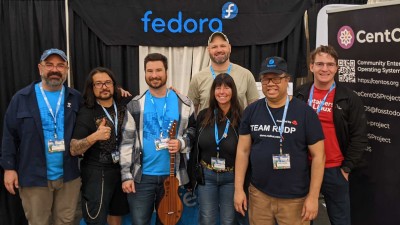
Booth #404
Visit CentOS at Booth #404. Fedora will be right next to us at Booth #305. CentOS experts will be on hand throughout the day to talk about CentOS Stream 10, EPEL, bootc, Image Mode Linux, OpenShift, and OpenStack.
Getting Started in Open Source and Fedora
Room 208, Friday, March 6, 2026 - 10:00 to 10:30
Amy Marrich
Are you new to the world of open source or looking to make your first contribution? This session will provide a guide for beginners interested in contributing to open source projects with a focus on the Fedora project. We'll cover a variety of topics, like finding suitable projects, making your first pull request, and navigating community interactions. Attendees will leave with practical tips, resources, and the confidence to embark on their open source journey.
The Fedora Docs Revamp: Building the Docs You Want to Read
Room 208, Friday, March 6, 2026 - 10:30 to 11:00
Justin Wheeler • Shaun McCance
Great documentation is the backbone of any successful open source project, but maintaining it at an operating system scale is a massive challenge. To combat contributor burnout and modernize our workflows, the Fedora Council has approved a major Community Initiative to revamp the Fedora Docs ecosystem.
Our goal is to build a dedicated support team for tooling and empower sub-teams of subject matter experts to own specific areas of interest. In this highly interactive 25-minute session, we will start with a lightning introduction to our Antora-based toolchain and the progress we’ve made in lowering the technical threshold for new writers. But we won't spend the whole time talking at you. The core of this session is driven by the audience.
As Linux users and open source enthusiasts, we want to know what you care about most—whether it's end-user support, beginner's guides, or getting involved with an open source community. We will crowd-source topics directly from the room and facilitate live breakout discussions around existing Fedora Docs components and where we need to build new ones. Come share your expertise, tell us what documentation you wish you had on day one, and learn how you can influence the future of Fedora's documentation!
A Brief Tour of the Age of Atomic
Room 208, Friday, March 6, 2026 - 11:15 to 11:45
Laura Santamaria
Ever wished to try a number of different desktop experiences quickly in your homelab? Maybe it’s time to explore Fedora Atomic or Universal Blue! In this tour, we’ll start with what makes these experiences special, then review the options from Silverblue to Cosmic to Bluefin and Bazzite (yes, the gaming OS). We’ll briefly get under the hood to explore bootc, the technology powering Atomic. Finally, we’ll explore how you can contribute to the future of Fedora Atomic.</p>
Accelerating CentOS with Fedora
Room 208, Friday, March 6, 2026 - 11:45 to 12:15
Davide Cavalca
This talk will explore how CentOS SIGs are able to leverage the work happening in Fedora to improve the quality and velocity of packages in CentOS Stream. We'll cover how the CentOS Hyperscale SIG is able to deliver faster-moving updates for select packages, and how the CentOS Proposed Updates SIG integrates bugfixes and improves the contribution process to the distribution.
Agentic Workloads on Linux: Btrfs + Service Accounts Architecture
Room 208, Friday, March 6, 2026 - 12:30 to 13:00
David Duncan
As AI agents become more prevalent in enterprise environments, Linux systems need architectural patterns that provide isolation, security, and efficient resource management. This session explores an approach using BTRFS subvolumes combined with dedicated service accounts to build secure, isolated environments for autonomous AI agents in enterprise deployment.
What we will explore:
- Best Practices and Linux OS optimizations for AI agent workloads
- BTRFS subvolume strategies for targeted differential updates to LLMs trained remotely, but used locally
- Service account security patterns for autonomous systems
- Edge deployment considerations that combine these strategies.
- Practical implementation examples from Fedora OS environments
RPM Packaging Workshop
Room 208, Friday, March 6, 2026 - XX:00 to XX:00
Carl George
While universal package formats like Flatpak, Snap, and AppImage have gained popularity for their cross-distro support, native system packages remain a cornerstone of Linux distributions. These native formats offer numerous benefits, and understanding them is essential for those who want to contribute to the Linux ecosystem at a deeper level.
In this hands-on workshop, we'll explore RPM, the native package format used by Fedora, CentOS, and RHEL. RPM is a powerful and flexible tool that plays a vital role in the management and distribution of software for these operating systems. During this lab, you will:
- write RPM spec files
- build, inspect, and install RPM packages
- run RPM quality checks to ensure best practices
This workshop is ideal for developers, sysadmins, and engineers who want to understand how native packages are built and maintained. By the end of this session, you'll have the knowledge and confidence to create and maintain RPM packages effectively.
The only prerequisite knowledge for the lab is basic command-line familiarity, such as running commands, editing files, and navigating directories. Attendees must bring their own laptop. All exercises run in a browser-based lab environment, so no specific operating system is required.